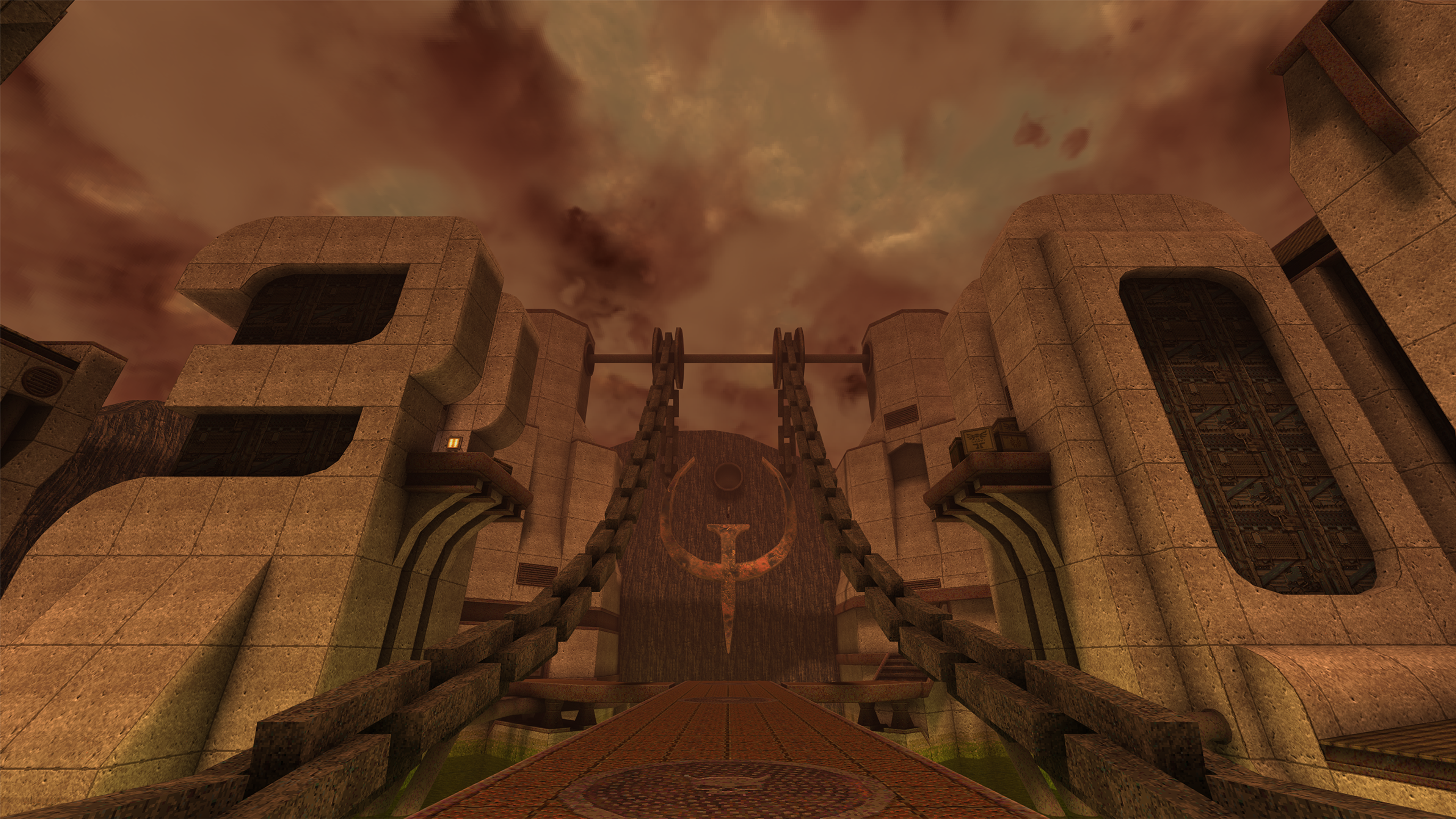
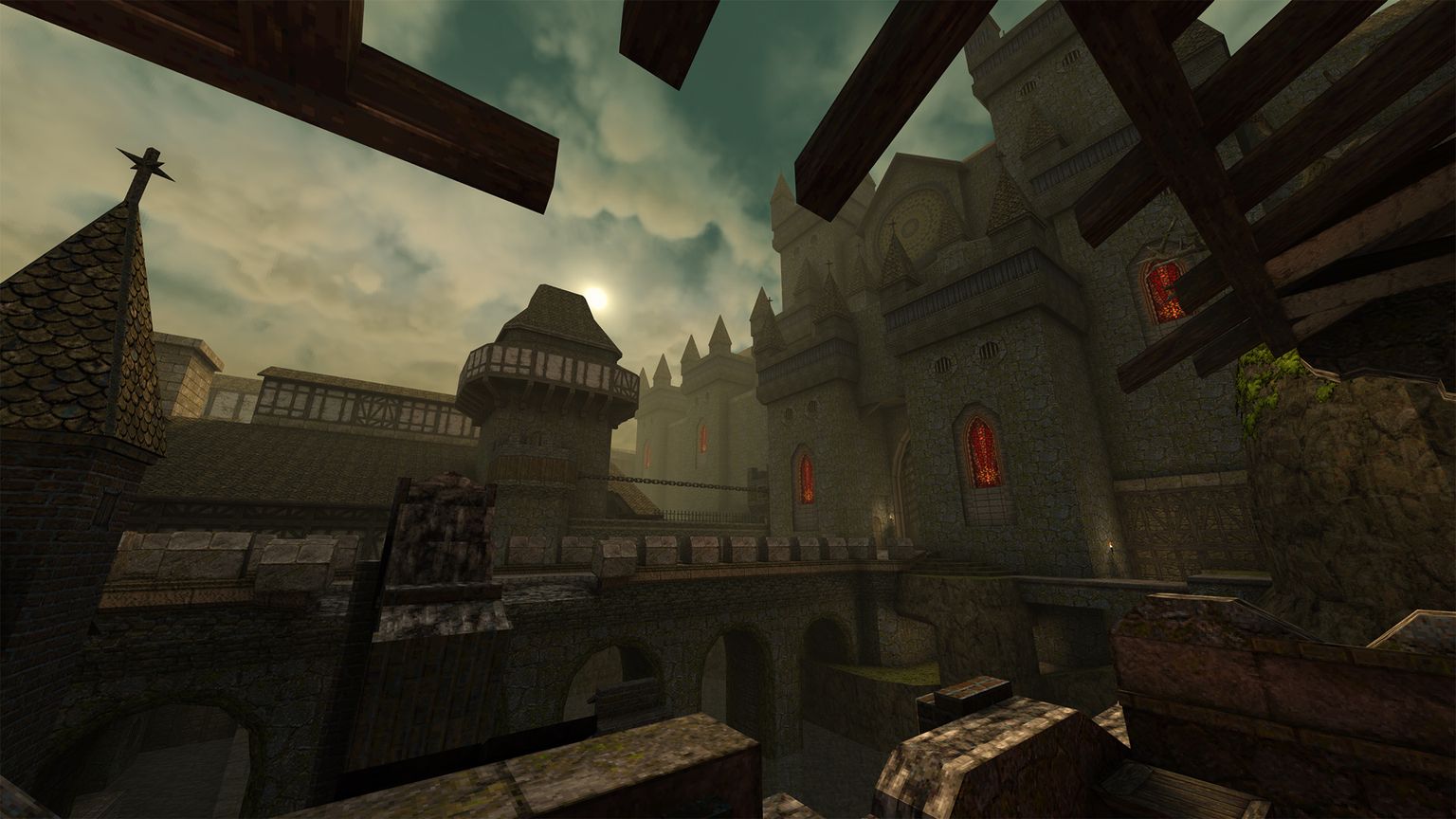
Released for Quake™’s 30th Anniversary, Dawn of the Machine is a brand-new episode for the FPS icon developed by MachineGames in collaboration with id Software featuring a time-twisting new 19-map campaign, new Deathmatch map, new soundtrack, new secrets to uncover and more!
As a project lead for Dawn of the Machine, MachineGames Lead Level Designer Andrew Yoder shares this special behind-the-scenes look at how this new expansion was created, celebrating three decades of Quake:
AN ENDING, A NEW BEGINNING
Here at MachineGames, some of us have designed levels for Quake since its release in 1996. Others on the team, including myself, started making Quake levels more recently. Together, we make up a ‘Quake Club’ that created Dimension of the Machine in 2021, Call of the Machine in 2023, and now Dawn of the Machine.
After Call of the Machine, work remained to finish Indiana Jones and the Great Circle™ and The Order of Giants DLC, but we saw a period of pre-production approaching and it looked like a great opportunity to make something new in time for Quake’s 30th Anniversary.
During the final stretch on Indy, I started talking with MachineGames Game Director Jerk Gustafsson about what was next for Quake Club.
From these early conversations, Jerk and I settled on three goals:
First and most importantly, this episode was a way for us to celebrate Quake’s 30th Anniversary. We wanted to create something that felt authentic to the spirit of the original game: Horror! Action! Madness! The thrill of exploring ancient ruins full of traps and monsters, barely escaping alive.
Second, we wanted to find ways to surprise veteran Quake players and offer a fresh, new experience. One of the main learnings from Dimension of the Machine is that we were too safe. Players wanted to see new weapons, new enemies, or at least see weapons and monsters from the expansions. We did better with our Quake II episode, [Call of the Machine], but I wanted to push for even more.
Third, Quake Club has always been an opportunity for the team to learn and have fun. Modern AAA video game development trends toward specialization. However, with Quake, thanks to the quality of the modding tools and the relative simplicity of the game’s fidelity, everybody can do a bit of everything. Here, there is no distinction between the specialist roles of ‘level designer,’ ‘environment artist,’ ‘combat designer,’ and ‘scripter,’ only personal preference and expertise.
FOUNDATIONS
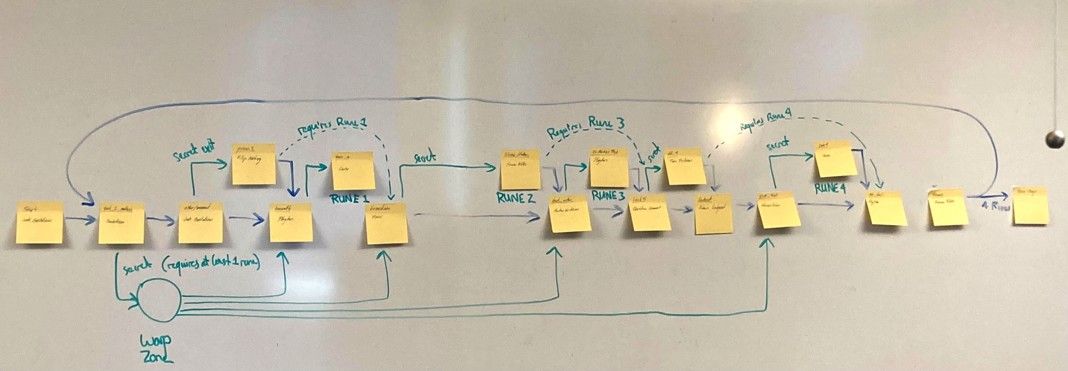
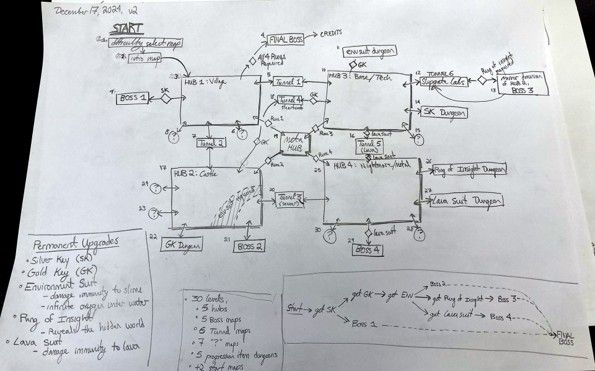
There were also early ideas for what themes and ideas we could explore through Quake. One influence was H.P. Lovecraft’s short story “Nyarlathotep,” which conveys the first-person experience of reality disintegrating into mad, timeless chaos. Other influences for me were the novels of Philip K. Dick and the short stories of Thomas Ligotti.
These influences and ideas coalesced into a simple foundation: the Ranger is trapped in a realm of illusion. Outer gods toy with our world, seeking to corrupt it, devour it or reshape it in their own image. Nothing you see can be trusted, but there is a path to break through the illusion, defeat the schemes of the outer gods and escape. Many of the specific details changed as the team explored and built their levels, but this key idea - a realm of illusion - persisted as a foundation.
AUTONOMOUS. FLAT. CHAOS.
Quake Club is more like modding than normal game development. The team structure is flat, with loose notions of seniority. Designers have autonomy and ownership over their levels, coming up with their own theme, setting and story. Although Jerk and I had set out an initial plan and theme, we revised the episode structure and story many times in response to new ideas from the rest of the team.
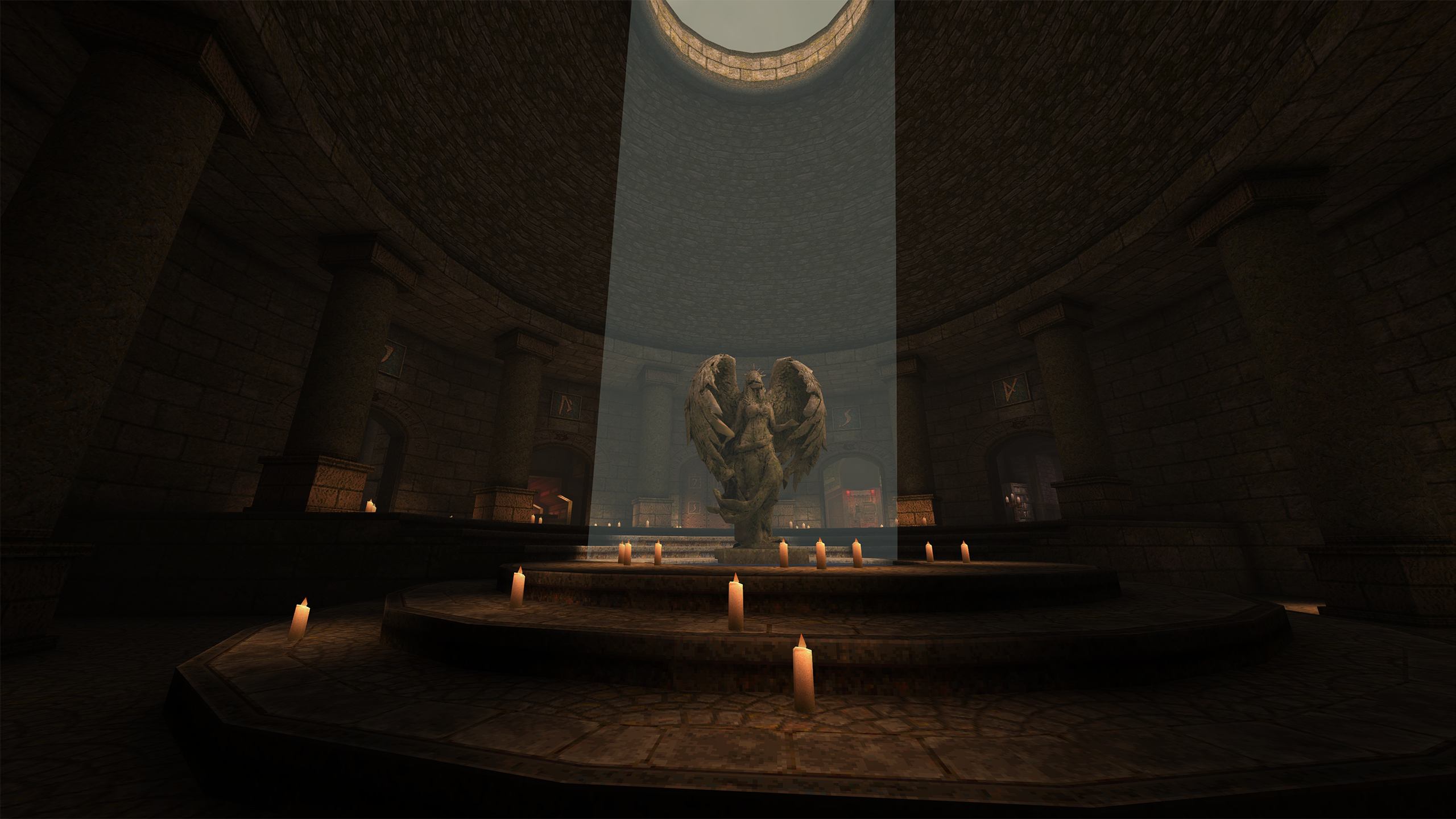
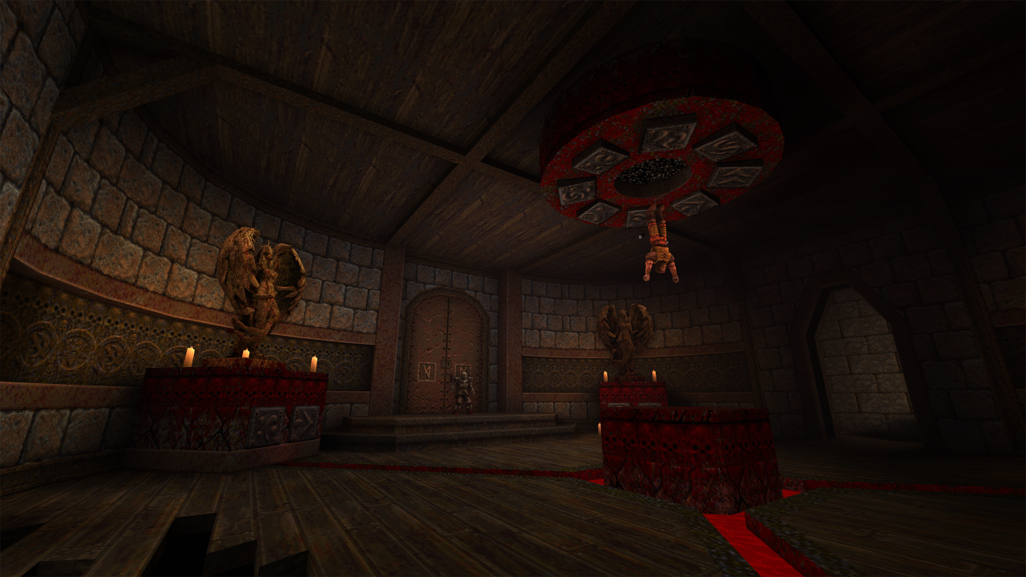
One fun example of this is with the angel statues. In an early version of “The Matriarch of Decay,” Senior Level Designer Erik Hörnström built shrines around his level, with each offering a reward and hinting at a story of a queen who rules that realm.
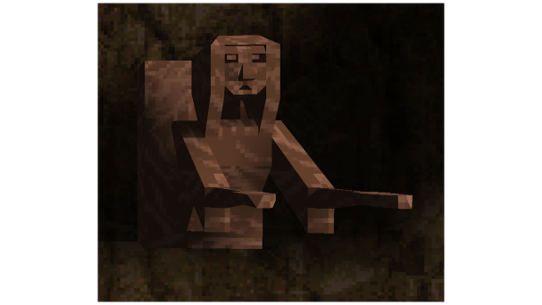
These early versions of the shrine were simple blocks, so Lead 3D Artist Pontus Wåhlin created the angel model to replace them. The angel model looked so good that other designers started using it across the whole episode, prompting new questions for the story and themes. Without spoiling it here, Dawn of the Machine is stronger for how we were able to integrate these ideas and unify the episode.
As another example, I was working on some gameplay scripts and wanted to try out seamless teleports, a mechanic other Quake mods have used. I made an example, showed it to the team and left it up to them whether they wanted to use it in their levels. Senior Technical Artist Tom Fritzson picked up these ideas and ran with it to create “The Haunted Tower,” pushing the mechanic to its limits. Though we start from autonomous ownership, the team’s flat structure works best when we seek each other’s help and play off each other’s strengths.
Some of those strengths aren’t part of our normal responsibilities. At one point in the production, Advanced Level Designer Christian Plogfors offered to make a new soundtrack. I said, “Sure, no harm in trying,” and Christian proceeded to make a fantastic set of moody dark-ambient tracks that give the episode its own identity, distinct from the previous expansions. The whole episode is so much stronger thanks to his contribution, stepping outside his normal role and bringing his other skills and passions to serve the project.
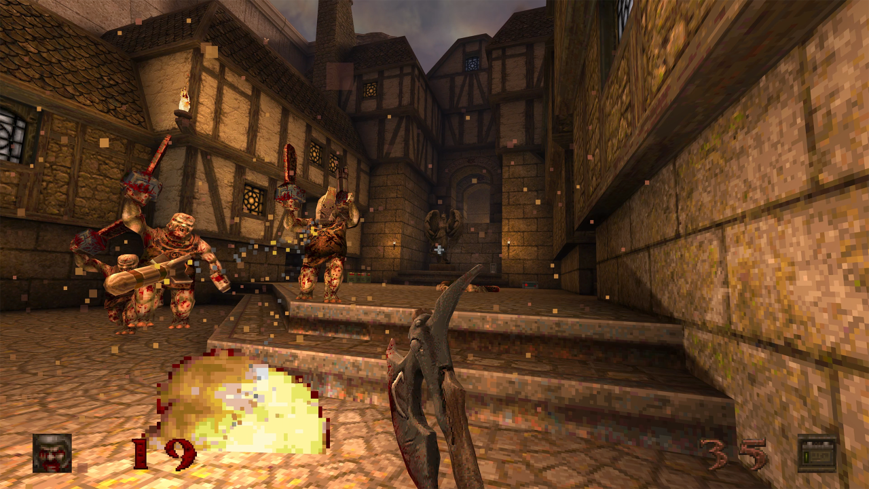
This autonomy may sound like a recipe for chaos...and it is!We had early plans for vast, interconnected sandbox levels and persistent player progression through a nonlinear world. Some of these ideas weren’t the right fit for how Quake Club works; they required a rigid, top-down plan, instead of the ground-up chaos of how we build. Some of these ideas, with a few small changes, were in reach but our best ideas came from the team discovering opportunities to build something awesome together!
30 YEARS OF QUAKE
The opportunity to make Dawn of the Machine has been a privilege, and the team here owes a lot to Quake and its legacy. As part of the new update, Senior Programmer Mike Rubits has added the id Vault, showing early game builds and levels from the original development team, early textures and models and archiving this crucial part of the industry's history.
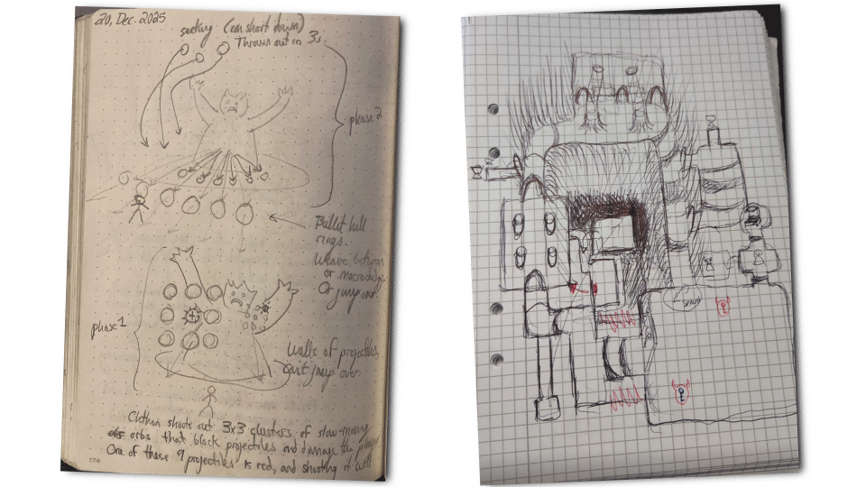
Quake Club and our work wouldn’t exist without the wider Quake community and our friends at id Software. Quake Club and I would like to thank Mike Rubits for his years of collaboration on these rereleases, the id QA team for testing and offering feedback throughout development, and the producers at id Software for helping us see the project through the hurdles to release. Dawn of the Machine would not have been possible without their support.
I also want to thank Kristian Duske for his wonderful TrenchBroom level editor, Eric Wasylishen for his compiling tools, and the wider Quake mod scene for 30 years of exploration and innovation.
Happy Birthday, Quake! <3
©1996-2026 ZeniMax Media Inc. All rights reserved.
Dawn of the Machine is currently available on XBOX Series X/S, XBOX One, Microsoft PC Store, Game Pass, PC Game Pass, Steam, Nintendo Switch 2 (via backwards compatibility) Nintendo Switch, PlayStation 5 and PlayStation 4 versions of Quake.